Running a successful commercial kitchen starts long before the first dish is plated. The equipment you invest in shapes the pace of your kitchen, the safety of your staff, and the consistency of every meal that leaves the pass. Yet many restaurant owners treat equipment purchasing as an afterthought—something to rush through before opening day or delay until something breaks.
In This Article
- What Should Restaurant Owners Look for When Purchasing Kitchen Equipment?
- How Does Professional Guidance Improve the Equipment Selection Process?
- What Types of Commercial Kitchen Equipment Are Most Commonly Needed?
- Why Is Equipment Quality So Critical to Long-Term Kitchen Performance?
- What Happens After the Equipment Is Purchased and Delivered?
- How Can a Free Equipment Consultation Help Before Making a Purchase?
- What Makes Florida Kitchen Services a Trusted Name in Commercial Equipment Sales?
- Building a Better Kitchen Starts with the Right Equipment Partner
Kitchen equipment sales done right are a strategic investment. When you work with experienced professionals who understand your specific cookline, the difference in day-to-day kitchen performance is immediate and measurable. This article walks through the most important questions restaurant owners ask when navigating equipment purchasing decisions, and offers practical guidance grounded in decades of commercial kitchen experience.
What Should Restaurant Owners Look for When Purchasing Kitchen Equipment?
The first thing to understand is that not all commercial equipment is built the same. Restaurants have vastly different needs depending on their menu, volume of service, and kitchen layout. A fast-casual concept that runs heavy fryer usage will need equipment built for relentless daily cycles, while a fine-dining kitchen may prioritize precision cooking tools that offer consistent temperature control.
When evaluating a purchase, look for equipment that matches your actual output requirements. Oversized equipment wastes energy and takes up valuable floor space. Undersized equipment breaks down faster because it’s being pushed beyond its design limits. A knowledgeable equipment consultant will assess your cookline before making a single recommendation—not after.
Warranty coverage is another critical factor. Commercial equipment endures significant wear across high-volume service periods, and a solid manufacturer warranty signals confidence in the product’s durability. Always review what the warranty covers and how service requests are handled before committing to any purchase.
How Does Professional Guidance Improve the Equipment Selection Process?
Many restaurant owners have experienced the frustration of working with salespeople who prioritize their own commission over the customer’s operational needs. The result is often a kitchen stocked with equipment that looks impressive on paper but doesn’t align with how the kitchen actually functions.
Professional guidance changes that dynamic entirely. An experienced consultant takes the time to understand your prep workflow, cooking methods, and finishing requirements before suggesting a single piece of equipment. They evaluate your kitchen layout, your team’s skill level, and the demands of your specific menu. The goal is always to build a kitchen that performs efficiently—not one that’s loaded with features you’ll never use.
Florida Kitchen Services, led by owner Joseph Cohen, brings over four decades of commercial kitchen experience to every equipment consultation. That depth of knowledge allows for recommendations that genuinely fit the restaurant’s needs, both now and as the business grows.
What Types of Commercial Kitchen Equipment Are Most Commonly Needed?
Commercial kitchens rely on a wide range of equipment to keep service running smoothly. The most foundational categories include cooking equipment, refrigeration, food preparation tools, and warewashing systems.
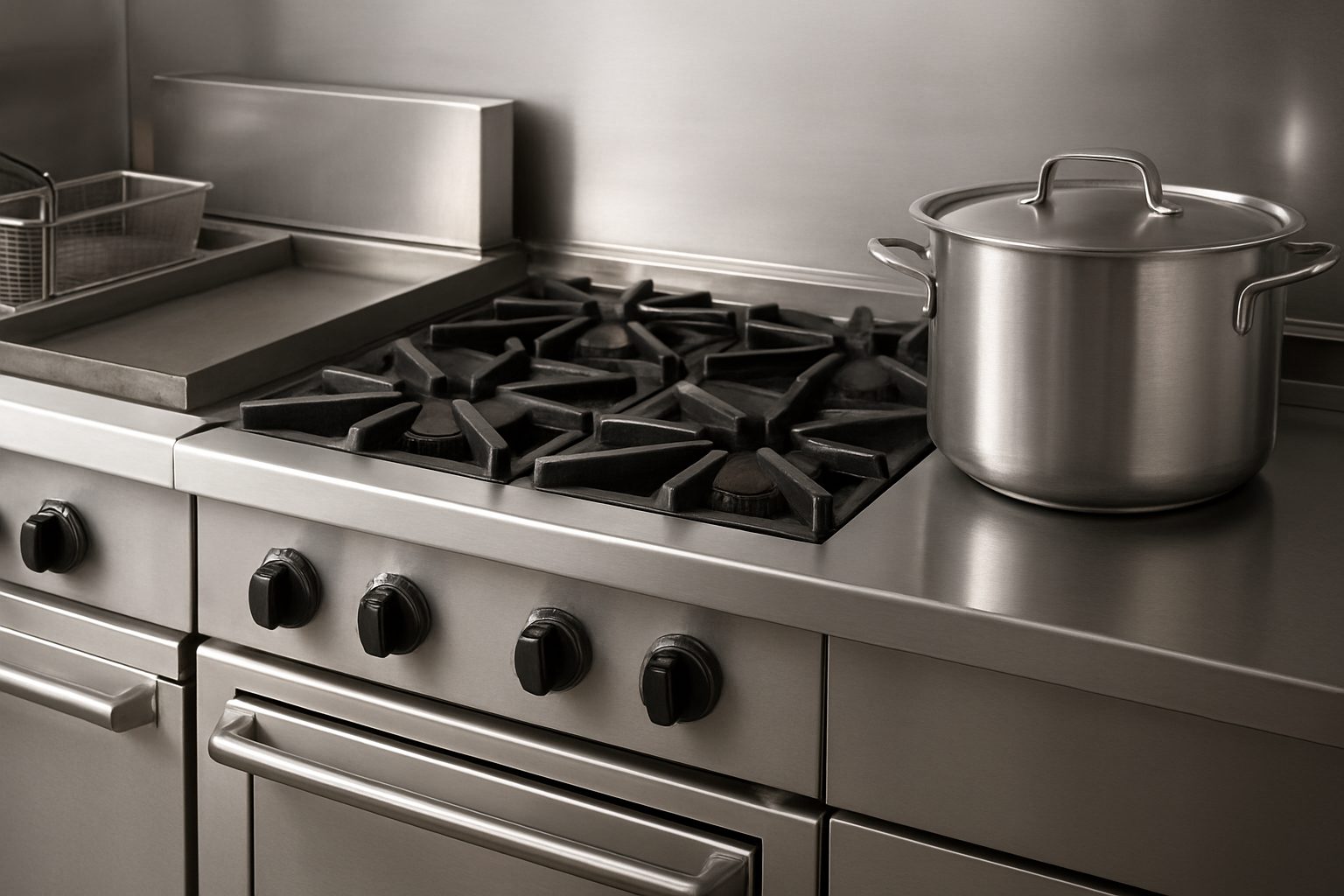
On the cooking side, gas ranges, convection ovens, commercial grills, charbroilers, and fryers form the backbone of most kitchens. High-speed and rapid cook ovens have also become increasingly popular in high-volume operations where ticket times are critical. Each of these pieces must be matched carefully to the menu and the volume of covers the kitchen is expected to produce.
Food preparation equipment—including commercial food processors, mixers, immersion blenders, meat slicers, and vacuum packaging machines—keeps prep efficient and reduces labor time significantly. Proper prep equipment allows kitchen teams to work faster without cutting corners on quality or food safety.
Warewashing is one area that gets underestimated. Under-counter dishwashers work well in smaller operations, while high-volume kitchens benefit from commercial dishwashers with faster cycle times and higher capacity. Selecting the right warewashing system reduces bottlenecks at the dish station and keeps the kitchen running without interruption.
Coffee brewers, espresso machines, and slushy machines round out beverage service needs for cafes and full-service dining concepts. Holding and proofing cabinets, steam tables, and griddles support banquet and high-volume breakfast operations. The breadth of available equipment means every restaurant can build a kitchen that’s exactly right for their concept.
Why Is Equipment Quality So Critical to Long-Term Kitchen Performance?
Low-quality equipment might seem like a cost-effective choice at the point of purchase, but the long-term picture tells a different story. Equipment that fails during service doesn’t just cost money in repairs—it disrupts your entire operation, strains your staff, and impacts the dining experience your guests receive.
High-quality commercial equipment is engineered to handle demanding kitchen environments. It maintains consistent performance across heavy use, resists the wear that comes from heat, moisture, and constant handling, and is far easier to clean and maintain. Over the full lifespan of the equipment, a higher-quality purchase almost always proves more economical than repeatedly repairing or replacing cheaper alternatives.
Sourcing equipment from a trusted supplier who stands behind what they sell also makes a significant difference. When you purchase through Florida Kitchen Services, all equipment comes with strong manufacturer warranties and the assurance that recommendations are made in your best interest—not based on margin targets.
What Happens After the Equipment Is Purchased and Delivered?
The relationship between a restaurant and its equipment supplier shouldn’t end at delivery. Professional installation, staff orientation, and ongoing maintenance support are all part of getting the full value from your investment.
Florida Kitchen Services ships all equipment directly to the restaurant, and purchases made through them come with a discount on future cleaning services. That ongoing service relationship ensures your kitchen stays in peak condition well beyond the initial setup phase. After equipment is installed, the team also provides cleaning services covering ceilings, tiles, walls, and floors—so your kitchen is fully operational and compliant from day one.
This end-to-end approach is what separates a transactional equipment sale from a genuine partnership. A well-maintained kitchen runs more efficiently, passes health inspections with ease, and creates a safer working environment for everyone on staff.
How Can a Free Equipment Consultation Help Before Making a Purchase?
Committing to a major equipment purchase without professional input is a risk most restaurant owners don’t need to take. A free consultation with an experienced equipment specialist gives you access to expert knowledge before spending anything.
During a consultation, a professional will review your existing kitchen setup, discuss your menu and service volume, and identify gaps or inefficiencies in your current equipment lineup. If you’re opening a new location, the consultation helps you build a spec list that’s grounded in operational reality rather than guesswork.
Florida Kitchen Services offers free equipment consultations through a direct call with Joseph Cohen. His approach prioritizes honest, practical advice over high-pressure selling. The goal is always to match the equipment to the restaurant—not the other way around.
What Makes Florida Kitchen Services a Trusted Name in Commercial Equipment Sales?
Trust in this industry is earned through consistency, honesty, and results. Florida Kitchen Services has built its reputation over decades of working directly with restaurant owners across Florida, offering guidance that puts the kitchen’s needs first.
The selection available covers the full range of commercial equipment a modern restaurant requires. Orders over a set threshold ship for free directly to the restaurant, and the team’s commitment to long-term client relationships means support doesn’t stop after the sale closes.
With Joseph Cohen personally handling consultations and drawing on more than forty years of hands-on commercial kitchen experience, clients receive advice from someone who genuinely understands how kitchens operate—not just what the spec sheet says.
Building a Better Kitchen Starts with the Right Equipment Partner
Choosing the right kitchen equipment is one of the most important decisions a restaurant owner makes. The quality of that equipment, the expertise behind the recommendation, and the support that follows the purchase all shape how well your kitchen performs over time.
Working with professionals who take the time to understand your specific needs—your menu, your team, your workflow—means the equipment you invest in actually works for your kitchen, not against it. That alignment between equipment and operation is what drives consistent food quality, staff efficiency, and long-term profitability.
To schedule your free equipment consultation with Florida Kitchen Services, call 352-753-8447 today and take the first step toward a kitchen that’s built to perform.
Key Points
- The success of a commercial kitchen heavily relies on the quality and appropriateness of the equipment selected.
- Different types of restaurants necessitate different equipment based on their menu, service volume, and kitchen layout.
- A knowledgeable equipment consultant will assess a kitchen’s specific needs before making any purchase recommendations.
- Warranty coverage is crucial, as it indicates the durability and long-term reliability of the commercial kitchen equipment being purchased.
- Investing in high-quality equipment proves to be more cost-effective over time compared to cheaper alternatives that may require frequent repairs.